SUMMITS
SUMMIT Nº 27: RYSY (POLAND)
POLAND

RYSY

12/08/2025
ALTITUDE
2.499 m

ÁLEX QUIROGA AND JORDI GIRONA

DIFFICULTY LEVEL
LOW
CHRONICLE
The golden age of mountaineering cannot be understood without the contributions of great Polish climbers such as Voytek Kurtyka and Jerzy Kukuczka. Kukuczka was the second person to climb all 14 eight-thousanders on the planet, preceded only by Reinhold Messner, and his famous remark to the Pole is “You are not second, you are great.” It is not the purpose of these lines to discuss the GOAT (Greatest Of All Time) of mountaineering, although there is no doubt that Kukuczka’s ascents had a pioneering component and a very powerful level of difficulty never seen in other expeditions (opening new routes on the summits, as well as some of his eight-thousanders being winter expeditions).
In an age of mountaineering dominated by “likes” and gaining seconds off the clock, in times marked by commercial expeditions bought with dollars… values such as frugality, effort, dedication, perseverance in achieving what you want, and above all, love and purity for nature and the mountains, take on special importance for me. I don’t climb mountains to have them beneath my feet, but to be part of them and connect with their essence. For all these reasons, since my immersion in the world of mountaineering, I have been drawn to figures such as Messner, Kukuczka, Kurtyka, Walter Bonatti, Òscar Cadiach, among others, for their way of relating and interacting with the mountains. The list of those who, for me, are the greatest in mountaineering cannot be understood without the Polish contribution, and for this reason, being in this territory, trodden years ago by these legends, is so meaningful to me.
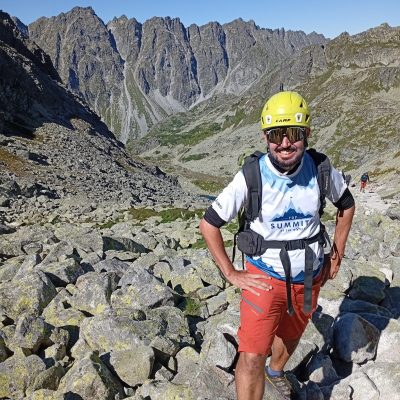
Rysy can be climbed from either the Polish or Slovak side, the latter being less technically challenging. Jordi and I opted for the Slovak side, and given the Polish locals’ fervor and passion for the mountains, we got up early to arrive at the Popdraské Pleso parking lot, the starting point of the route, shortly before 7:00 a.m. We were by no means the first, as Rysy is highly sought-after among mountaineers, mainly Polish, although we also encountered a good percentage of foreigners.
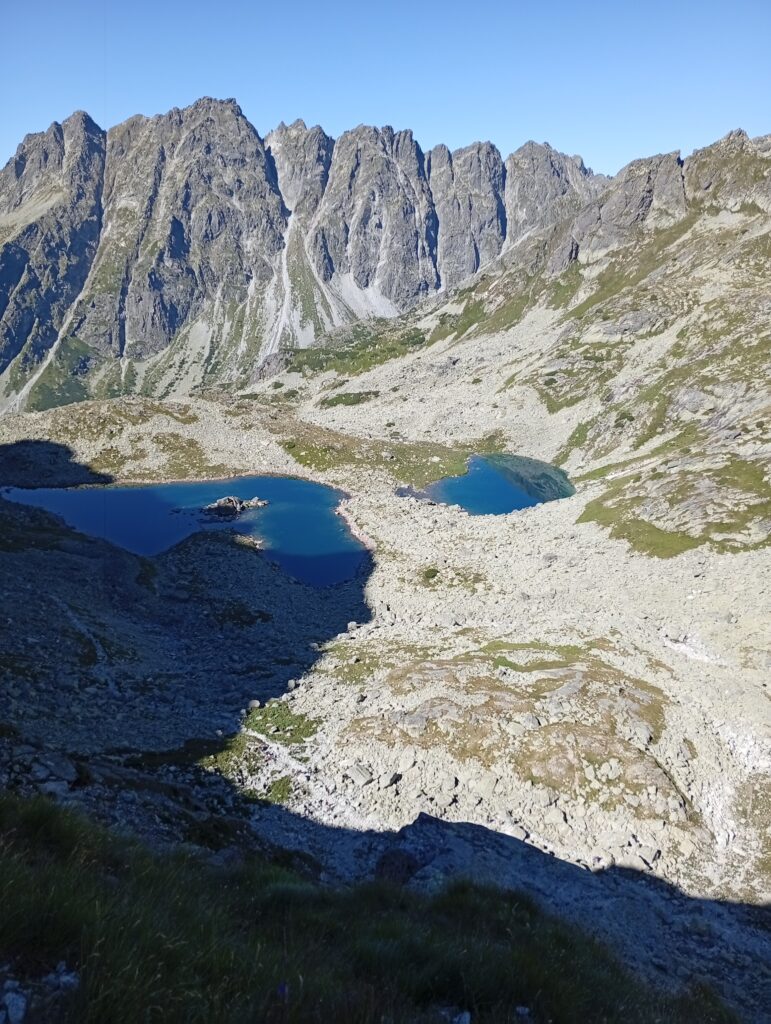
There are 9.9 kilometers to the summit, along with approximately 1,250 meters of elevation gain from the lowest point of the route, located at 1,261 meters. The first 4 kilometers are on a road and are not particularly attractive, although they largely pass through forests and vegetation that protect us from the heat.
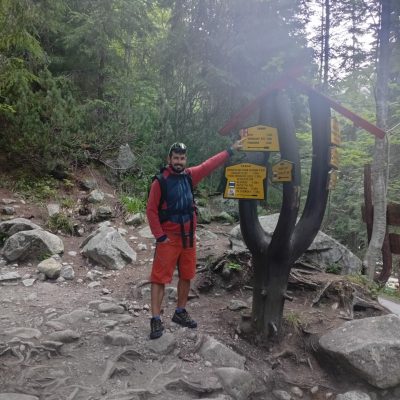
The road ends when we reach Popradske Lake, where we find signs indicating that to climb Rysy we must take the path to the left and that the time to reach the summit is approximately 3 hours. This is a turning point in the route, which from here gains considerably in interest and scenic appeal. A section begins where the trail zigzags several times through a very dense forest, where the route begins to gain elevation with steeper slopes to overcome.
Once we pass the 1,700-meter mark, the trees and vegetation begin to disappear (in Spain, trees can be seen up to 2,500 meters, although the lower temperatures in the Tatras lower the altitude), and in front of us, we can better see the horizon, as well as the valley we are in and Lake Velké Zabie. We continue to gain altitude, although our progress is slowed by the crowding of people on a section equipped with metal ladders and chains. This section isn’t particularly difficult to overcome, and together with Jordi Girona, we try to progress quickly and move several people forward to “clear” the path, although it’s a futile task given that, like an ant’s nest, people appear en masse, scattered all over the trail.
Along with the summit of Snowdon (the highest point in Wales at 1,085 meters), Rysy is probably the most crowded route we’ve encountered in the TSOW project. Poland is a country of nearly 40 million inhabitants, and its few mountain ranges are concentrated in the south, in the Tatra Mountains, which are 60 kilometers long by 30 kilometers wide and account for only 30% of the country’s territory. This explains the overcrowding of the Tatra trails, as there is an unequal ratio between the number of Polish hikers and the number of kilometers of hiking available per capita. So, with this exercise in empathy and understanding for the Poles, we continue to progress on our route.
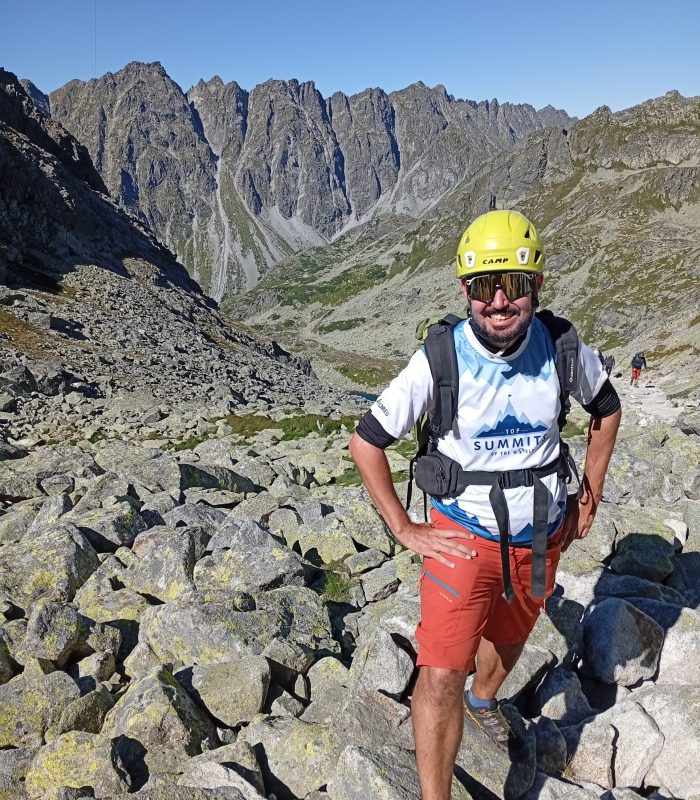
I take a photo with a kind of arch from which Tibetan prayer flags hang. These days, I’ve been particularly connected to Tibet by reading “Seven Years in Tibet” by Heinrich Harrer. Someday I’d like to be in the Himalayas, meet its people, its culture, and have the opportunity to climb one of its peaks (why not an eight-thousander), and this book has undoubtedly been a great source of inspiration. Speaking of the Himalayas, and as far as Top Summits are concerned, there are the TOP 3 highest peaks in the world, which are as follows:
- The King of Kings at 8,848 meters and the national peak shared by Nepal and China.
- One of the most dangerous peaks awaiting me in the project due to its technical difficulty, extreme climate, and treacherous terrain. 8,611 meters and Pakistan’s national roof.
- The bronze goes to India’s national roof.
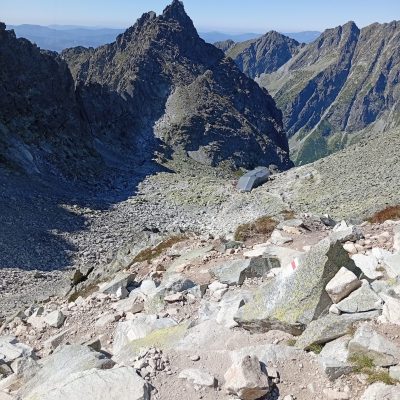
The Tibetan flags act as a gateway and a welcome sign to the Chata pod Rysmi refuge, located at an altitude of approximately 2,250 meters. Built in 1933, Chata pod Rysmi is the highest rural lodge in the Tatras, although we don’t stop there and continue onward to a spectacular mountain pass that serves as the border between Slovakia and Poland. There, we take a short break to hydrate and eat, take some photos, and chat with some hikers so we aren’t accused of being unfriendly. From this point, we can already see Mount Rysy, from which we are just under 200 meters of elevation gain.
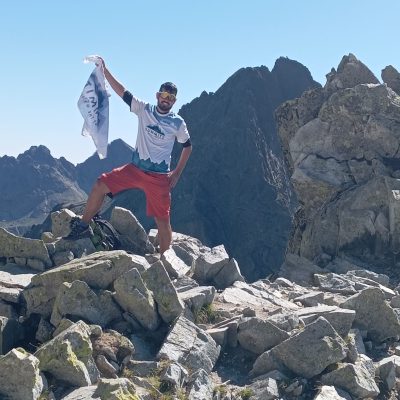
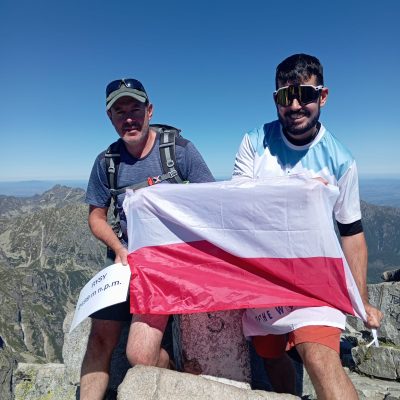
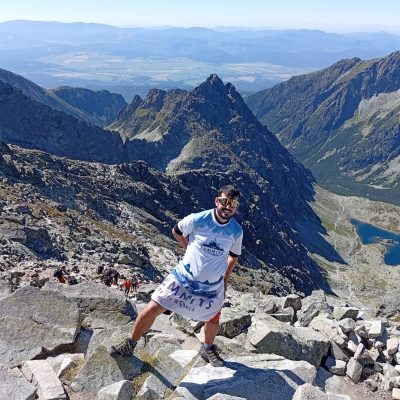
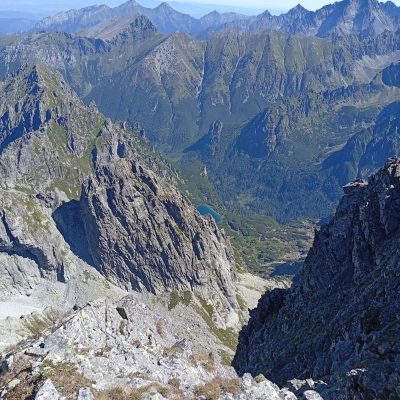
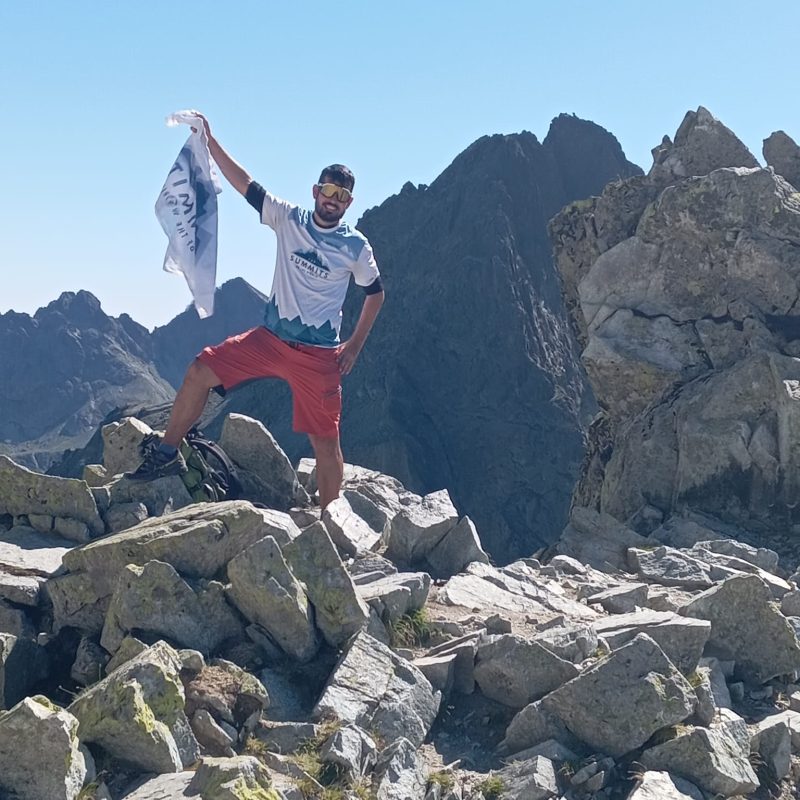
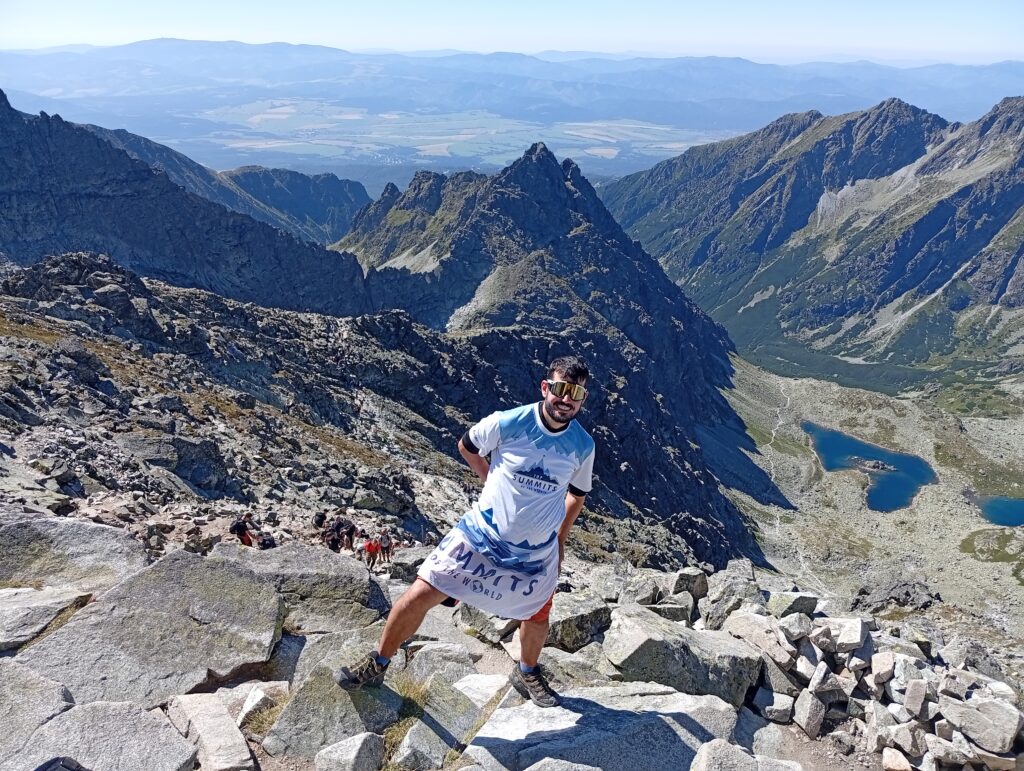
The last part of the climb presents a steeper path, although it is neither technical nor excessively difficult. We take a few short cuts to avoid the countless people crossing in front of us and thus progress more quickly to the summit. The summit of the Polish Rysy is located at 2,499 meters (its neighboring peak, the Slovak Rysy, is 2,503 meters), and while we almost have to ask for a ticket to reach it, once there, we have privileged views of the Tatra Mountains, and on the horizon we see the recently ascended “Gerla,” the highest peak in Slovakia. We take advantage of the fact that it is right next door and also climb the Slovak Rysy, which is even more crowded than the Polish Rysy.
Our base of operations during our trip to Poland was the city of Zakopane (population around 30,000), also known as the winter capital of Poland, located in the southern part of the Podhale region, at the foot of the Tatra Mountains. Upon arrival, I think of places like Chamonix (France) or Zermatt (Switzerland), where we visited during our week in the Alps in 2024. These places, with the passage of time, the growth of tourism, and their privileged location near the mountains, have changed their lives and flooded the streets with currency.
Our first attempt at an activity in Zakopane is frustrated. We plan to take a funicular up a mountain from which we’ve been told there are great views, but we give up when we see the endless line to buy tickets. For me, and especially for Jordi, the crowding of people stresses us considerably, while at the same time we’re saddened by the “commercialization” and tourist pressure to which certain areas of nature are subjected, ultimately seeing their essence considerably altered. But such is human nature; we have bought everything, buy everything, and will continue to buy everything (including trips to the moon). We try to live as comfortably as we can with this circumstance, the crowds, although actually walking the streets of Zakopane becomes a real odyssey.
During the days we were in Zakopane with Jordi, we chose different paths. In his case, he chose his other passion (ornithology), and in my case, he wanted to continue discovering new natural environments. The “Route of the Five Polish Lakes” is highly recommended. In my case, I take a bus (there are plenty of them) that takes me to the Moskye Oko parking lot, the starting point of the route. There, there is an option to hike to the main lake of Moskye Oko by horse-drawn carriage, although this isn’t in my plans, so I opt for a more independent option.
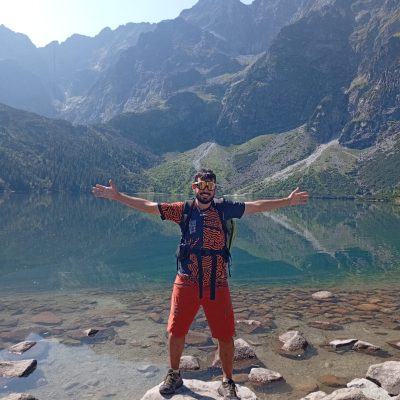
I alternate the day between running and walking depending on the terrain and reach the main lake of Moskye Oko, which boasts a beautiful and spectacular landscape. In my case, to enjoy greater peace and quiet and avoid the already “famous” crowds, I continue along the route until I find a less crowded location and take the opportunity to read and finish Cristina Martin Jimenez’s book “The Owners of the Planet.” I recommend this writer, a true expert in investigative journalism, a scholar of power, and a defender of human freedom.
I’m taking the day easy. My partner Jordi doesn’t like to be in the mountains in the afternoons because of the inclement weather that usually occurs during this time of day, although in my case, I’m a little more lax in this regard. I don’t mind starting or finishing hikes late, but I always maintain an attitude of respect, caution, and awareness of the state of the environment and the mountains. Today I have about 24 kilometers of hiking ahead of me, so I’m leaving Lake Moskye Oko and heading for the next lakes.
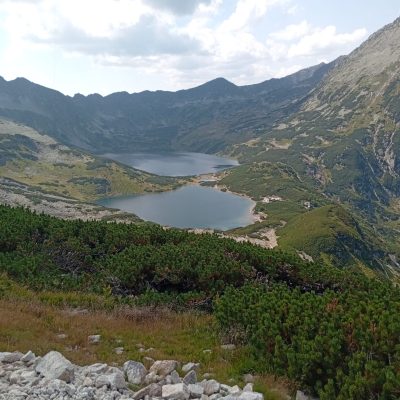
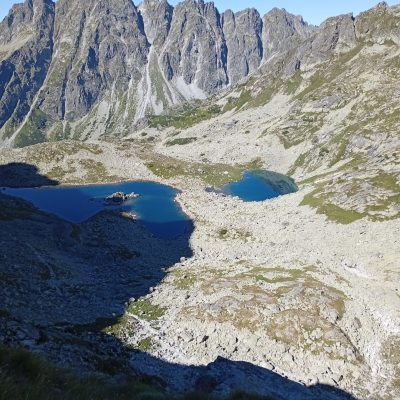
Starting from Moskye Oko and heading toward Przedni, Maly, and Wielki lakes, one of the most beautiful landscapes I’ve ever seen unfolds before my eyes, joining other magical sites such as the Gavarnie Circus, the Colomers Circus, the Montrebei Gorge, and the view of the Matterhorn, among others. Since my childhood, I’ve been fascinated by the fusion of water and forests, and before me lie beautiful lakes with vast landscapes of intense greenery. I enjoy a trail that alternates between climbs and descents, a trail with some technical sections, as well as some others that allow me to run. A fantastic day in the mountains and a highly recommended excursion to take during your visit to the Polish Tatras.
The week in the Tatras comes to an end. We have successfully completed a projection, a drawing, a dream, an idea for an adventure… which had its genesis the previous year in the Alps and which was to ascend, in a single trip, the not-so-easy Gerla (Slovak peak) and Rysy (Polish peak). We have achieved it. And a dreamer is always a dreamer, so in the Tatras, together with Jordi, we began to dream, to draw, to paint the picture of next year that we hope to continue sharing with you here. Thank you, Jordi, for being a great mountain companion, thank you for always responding positively to the challenges and projects I throw at you, thank you for being the good person that you are.
GALLERY